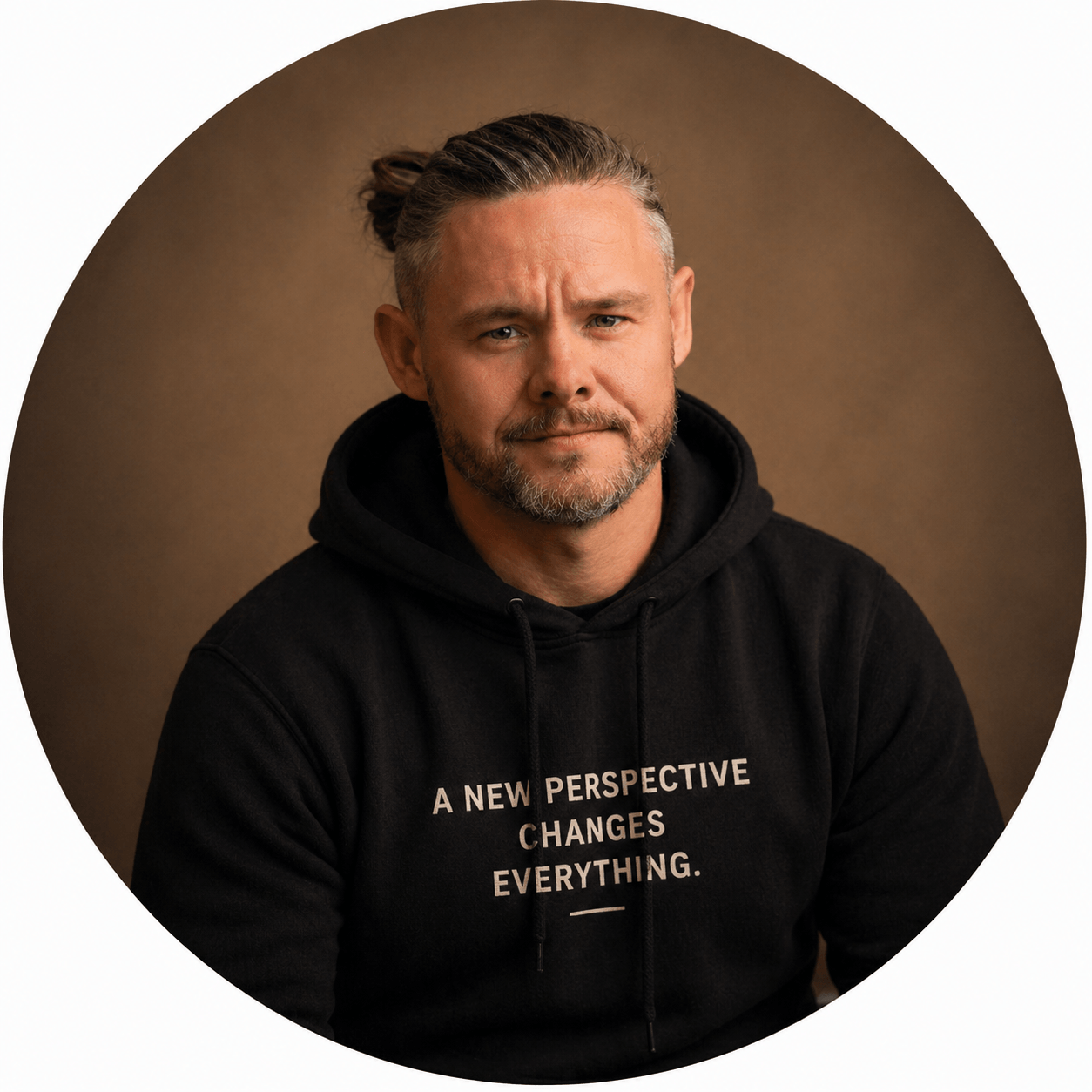
It's not just pain. It's my becoming.
I've been walking through fire since I was a child. Though for many years, I didn't know it. I only knew that something inside me felt unsafe, unwanted, unseen.
I was born into a world where love came with conditions and chaos was normal. My family home was not a place of comfort. It was a place of survival.
By the time I was old enough to understand anything, I'd already seen too much. My mother was drowning in her own pain and turned to alcohol to keep herself afloat. My brother and sister were deep in the grip of heroin addiction. My father had left by the time I was three. What was left was me - a little boy absorbing the unspoken grief of an entire house.
I grew up surrounded by conflict, addiction, neglect, and emotional absence. There were arguments, screaming matches, broken glass, doors slammed shut. And in the middle of it all, I was just trying to find safety.
"My earliest coping mechanism was to disappear."
I became quiet, observant, careful. I kept the peace at all costs. I learned to make myself small so I wouldn't become another burden. I locked myself in my room with headphones on, playing music loud enough to drown out the yelling.
I became hyper-attuned to everyone's emotions - scanning the room, walking on eggshells, making sure I was never the reason things got worse. I carried the emotional load of a family in crisis before I even had the words for it. That's where it began. The people-pleasing, the caretaking, the self-abandonment. On a psychological level, I became what is known as the "parentified child" - someone who takes on adult emotional responsibilities far too young. It wasn't a conscious choice. It was survival.
I didn't cry much. I didn't speak up. I became strong, or at least that's how it looked. Inside, I was scared, lonely, and aching for a kind of love and presence I couldn't find. I internalised everything. I convinced myself that my needs didn't matter, that asking for help would only push people further away.
"I wasn't living.
I was reacting."
As I entered my teens, my internal pain started looking for release. At 15, I turned to cocaine. At first it was just on weekends - but it quickly became a lifeline. A way to feel something, or nothing at all.
I began to seek relief through every escape I could find: drugs, alcohol, sex, intensity, chaos - anything that could take me out of my body, out of the numbness. I got lost in addictions, in dysfunctional relationships, in patterns that mimicked the very pain I'd grown up with. My nervous system was wired for survival - for fight, flight, freeze - and I didn't know how to come down.
I chased spiritual highs too. Anything that promised transcendence. I got caught in illusions, in fantasies of awakening, in trying to become someone I wasn't. I chased visions, spirit guides, tools, techniques, teachers - thinking the answer was always out there. But no matter what I found, the ache inside remained.
"It wasn't until I stopped seeking and began sitting - truly sitting, with myself that everything started to change."
My healing wasn't clean or linear. It was brutal. It required me to dismantle everything I thought I was - every mask, every defence, every identity I had built to survive. I had to sit in the silence.
I had to stop running. And I had to feel.
For almost a decade, and as honestly as I could, I've walked this path. Not perfectly - I've caught myself attaching to ideas, to identities, to ways of seeing myself, and had to keep returning. But that returning is the work. That's what I know most deeply.
I've worked with Ayahuasca for close to a decade, both in my own healing and in supporting others. I've trained in psychotherapy, Internal Family Systems, trauma release, and nervous system regulation.
I've wept, screamed, broken, emptied. I've seen the parts of me I once rejected - the angry one, the numb one, the scared child, the addict - and I've learned how to hold them.
"Nothing is broken."
All those patterns - the addiction, the avoidance, the perfectionism, the over-giving, the emotional shutdown, they were never flaws. They were intelligent responses to overwhelming pain.
They were how I survived a world that didn't know how to love me gently. And they can change.
That's what I want people to know.
That's what I live for.
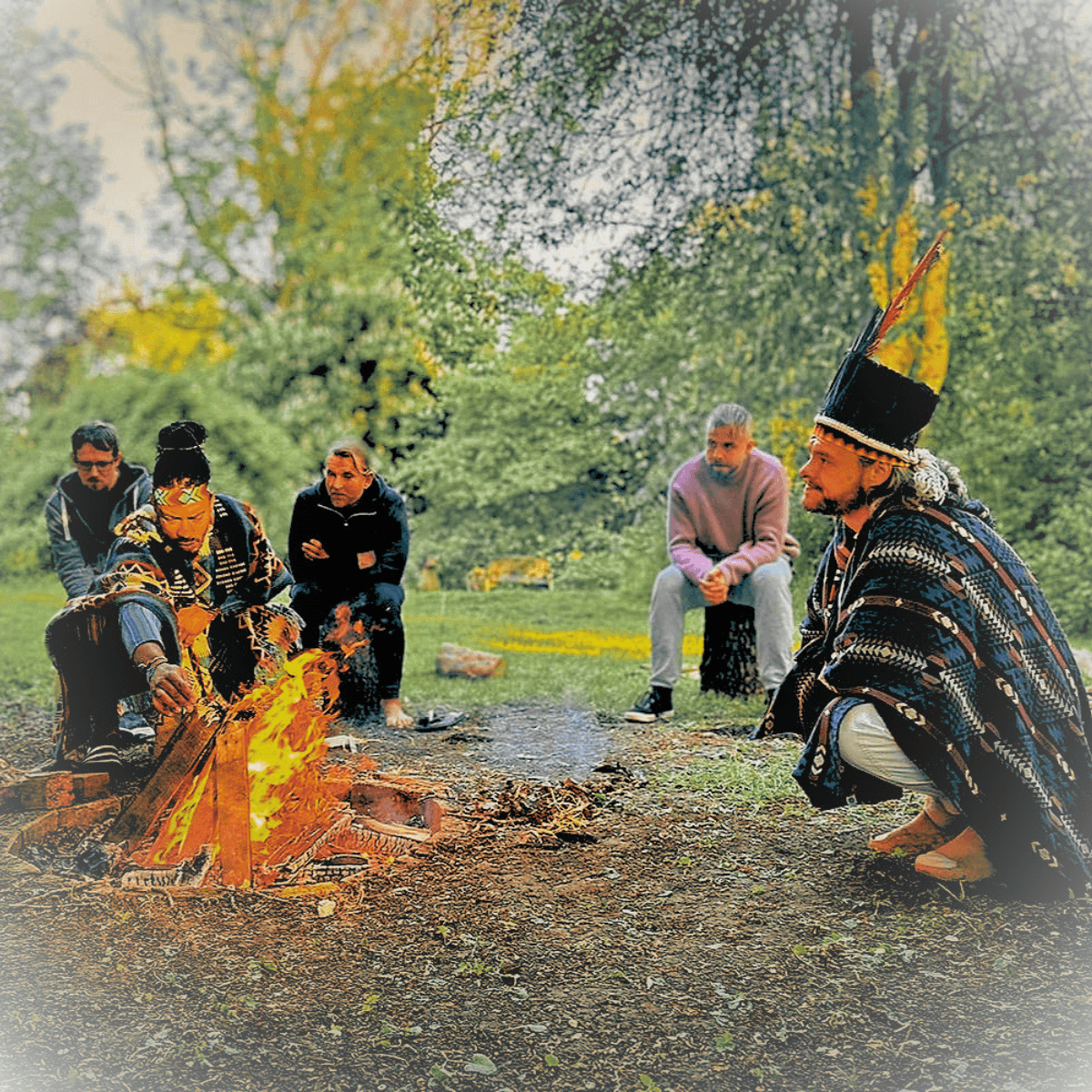
I've now held space for over a thousand people in deep ceremony, private sessions, and group integration. I'm a trained life coach and the creator of ERPT (Embodied Relational Parts Therapy™) - an approach I developed not from theory, but from everything I've lived and everything I've witnessed in the room with people.
I don't stand above the people I work with. I walk with them. I've lived the pain. I still feel it. But I meet it differently now - from presence, not panic. From stillness, not strategy. From silence, not seeking.
"Ten years into this work, life reminded me that the tests don't stop."
I want to be honest with you about something.
Last year, within the space of two weeks, I lost my mother and my brother. Two significant people in my life left in a tragic way, one after the other. Alongside other losses that came with that, my home, the life I had built around me.
I'm not sharing this for sympathy. I'm sharing it because I think it matters.
Because this work has never been about reaching a place where pain stops coming. Life doesn't work that way. Ten years of walking this path, thousands of people held, a method built from everything I've lived, and I was still brought to my knees.
What I can tell you is that I didn't run. I didn't reach for something to take it away. I sat with it - the grief, the loss, the ground disappearing beneath me. It was brutal. Some of it still is.
But something had changed in how I met it. Not that it hurt less. But I could be with it differently. I could stay with myself inside it rather than abandoning myself to survive it.
That's what this work has given me.
And that's what I want for the people I sit with.
Not a life without pain. But the capacity to meet it - honestly, openly, without having to run.
"This isn't a story of brokenness. It's a story of returning."
It's not just pain. It's my becoming.
And if you're reading this, maybe it's yours too.